Choosing restaurant software shouldn’t feel like assembling a puzzle. But for many operators, that’s exactly what it becomes; one tool for inventory, another for scheduling, another for reporting, and none of them fully connected.
The result? More complexity, not less.
The best restaurant software changes that. Instead of stitching together systems, it gives you a unified suite to run your entire operation, from planning to execution to performance analysis.
In this guide, we’ll break down what actually makes restaurant software “the best” and how to choose a solution that drives real results.
What Is Restaurant Software (Today)?
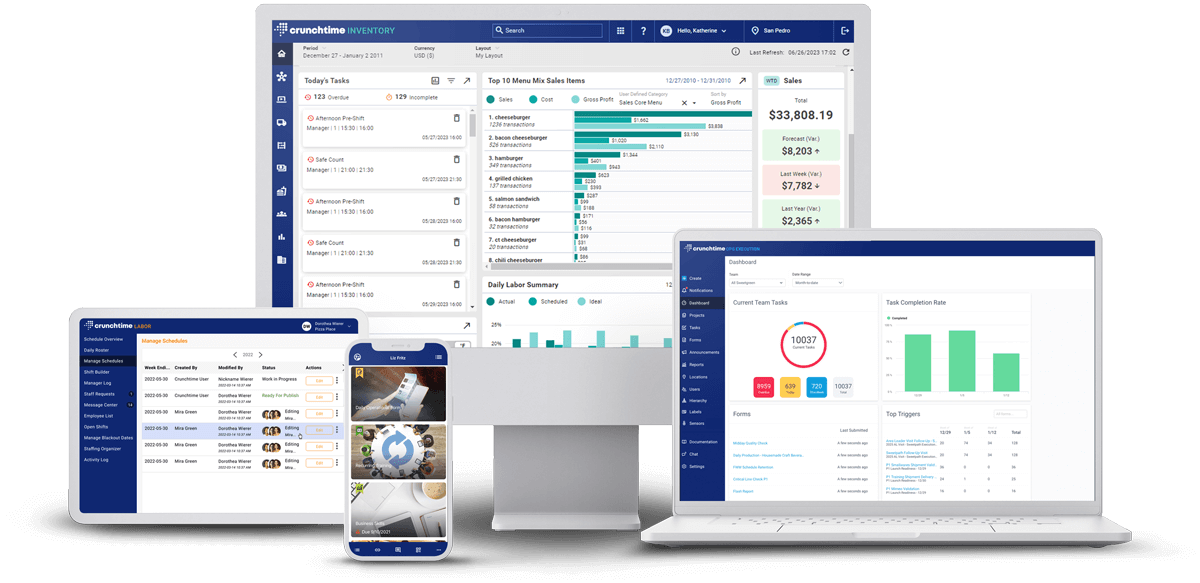
Restaurant software used to mean a handful of tools that solved individual problems. Today, the definition has evolved. The best restaurant software acts as an operating system for your business, connecting:
- Back-of-house operations (inventory, prep, food cost)
- Workforce management (labor, scheduling, compliance)
- In-store execution (tasks, audits, food safety)
- Kitchen production (order flow, pacing, accuracy)
- Analytics and reporting (performance insights across locations)
Instead of separate workflows, everything works together, powered by shared data.
The Problem With Most Restaurant Software
Before identifying what’s “best,” it’s important to understand what doesn’t work.
Many restaurants rely on disconnected systems that create:
- Fragmented Data
- Each system tells a different story, making it hard to trust the numbers.
- Manual Workarounds
- Managers spend hours exporting, reconciling, and double-checking data.
- Inconsistent Execution
- Without shared workflows, every location operates differently.
- Slower Decision-Making
- By the time reports are reviewed, the opportunity to act has passed.
The best restaurant software eliminates these issues by design.
How to Evaluate the Best Restaurant Software
Instead of focusing on features alone, the smartest operators evaluate software based on how well it improves outcomes. Here are the key criteria that separate average tools from best-in-class solutions:
1. Does It Connect Your Entire Operation?
Most software solves one problem. The best restaurant software connects them all:
- Inventory impacts labor planning
- Forecasting drives ordering and prep
- Task execution affects guest experience
- Kitchen performance influences throughput
When these systems are unified, decisions become faster and more accurate.
2. Does It Turn Data Into Action?
Reporting isn’t enough. Look for restaurant software that:
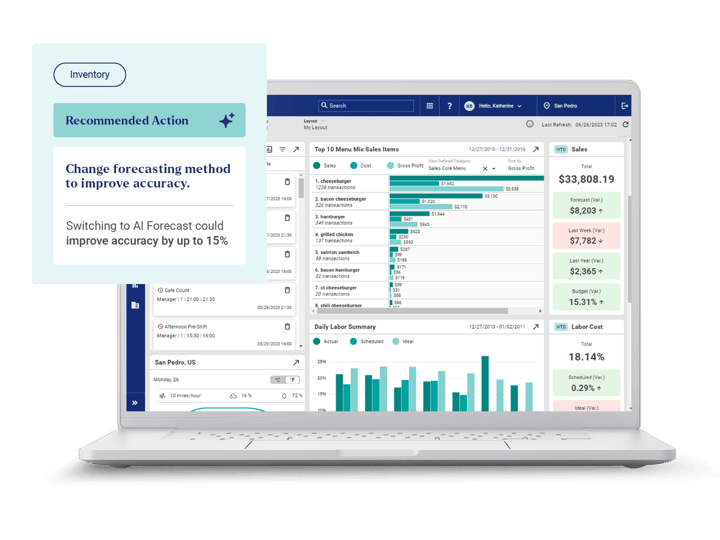
- Highlights what’s changing in your business
- Identifies risks and opportunities automatically
- Recommends next steps
This shifts your operation from reactive to proactive.
3. Does It Actually Reduce Manager Workload?
Software should simplify operations without adding more steps. Best-in-class solutions:
- Automate routine tasks (ordering, scheduling, audits)
- Eliminate duplicate data entry
- Provide clear, actionable insights
If your managers are still buried in manual work, the software isn’t doing its job.
4. Does It Scale With Your Growth?
What works for 5 locations often breaks at 50. The best restaurant software:
- Standardizes processes across all locations
- Maintains visibility as complexity increases
- Supports expansion without adding operational friction
Scalability isn’t optional; it’s essential.
5. Does It Deliver Measurable ROI?
At the end of the day, software should improve your bottom line. Top solutions deliver results like:
- Reduced food cost variance
- Lower labor costs
- Increased operational consistency
- Higher guest satisfaction and retention
If you can’t tie the software to financial outcomes, it’s not the right solution.
Core Capabilities to Look For
While strategy matters most, there are key capabilities every leading solution should include:
- Reporting & Analytics
- Unify data across your operation and turn it into insights that drive better decisions.
Why AI Is Becoming Essential in Restaurant Software
AI is no longer a “nice to have,” it’s quickly becoming a requirement.
The best restaurant software uses AI to:
This allows operators to move faster, reduce risk, and operate with greater precision.
The Shift From Siloed Tools to Unified Solutions
The biggest shift in restaurant software is happening right now: Operators are moving from point solutions to unified suites. Instead of managing:
- One tool for inventory
- One for labor
- One for tasks
- One for reporting
They’re choosing systems that bring everything together.
Why? Because disconnected tools create friction, and friction limits growth.
Benefits of Choosing the Right Restaurant Software
When you invest in the right technology suite, the impact shows up across the business:
- More Consistent Operations
- Every location follows the same playbook.
- Faster, Smarter Decisions
- Real-time insights replace delayed reporting.
- Lower Costs
- Better forecasting and automation reduce waste and inefficiency.
- Stronger Teams
- Managers spend less time on admin and more time leading.
- Better Guest Experiences
- Execution improves across every touchpoint.
Choosing Software That Actually Moves the Needle
There’s no shortage of restaurant software on the market.
But the best solutions don’t just add functionality, they remove friction.
- They simplify operations.
- They connect your data.
- They help your team execute at a higher level, every day.
If your current systems feel disconnected, manual, or difficult to scale, it’s a sign you’ve outgrown them.
Because the best restaurant software isn’t just something you use; it’s something your entire operation runs on.
Click here to get in touch and learn more about why the best restaurant chains in the world choose Crunchtime to manage profitability and drive great customer experiences.
.png)