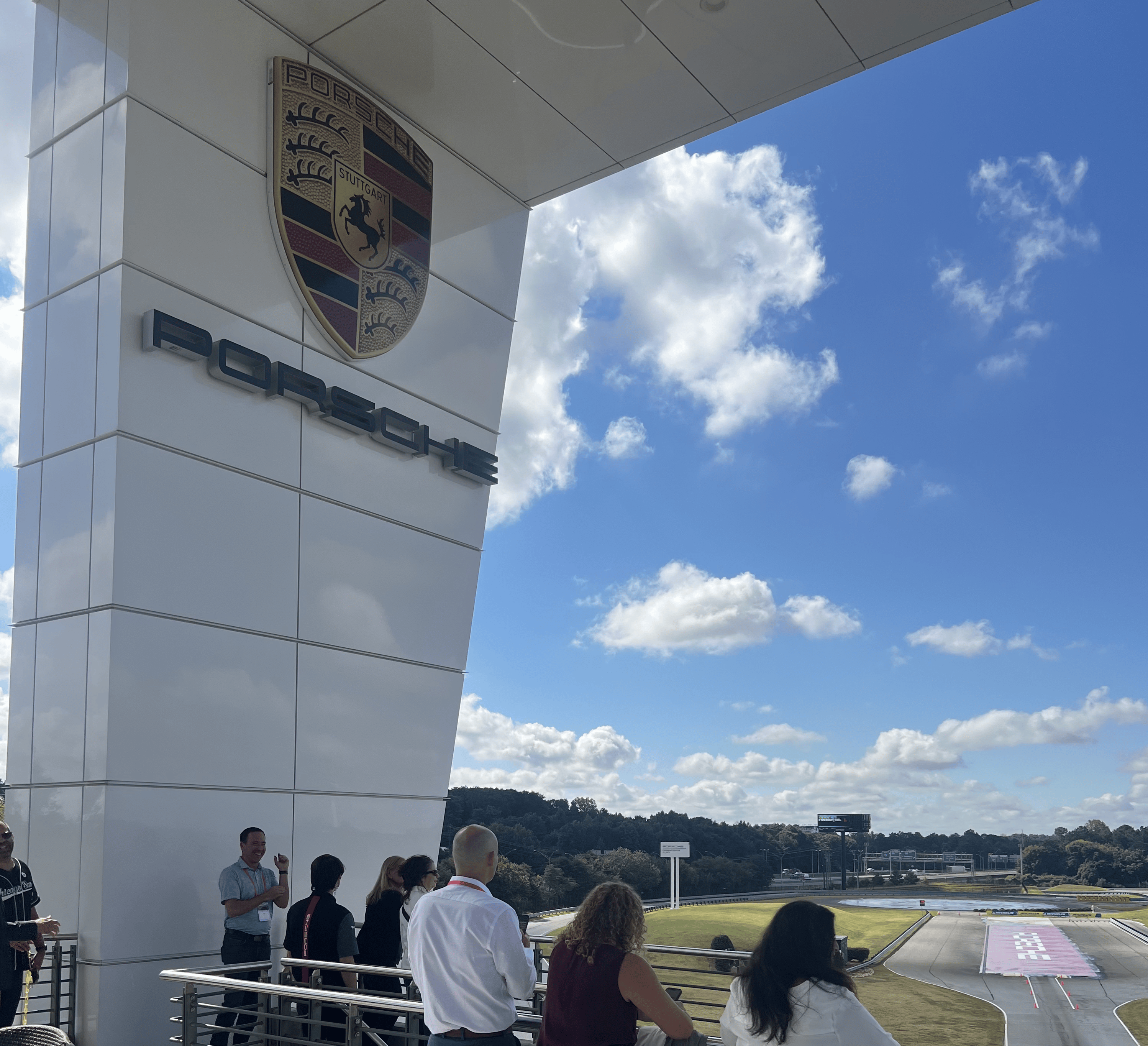
From the back office to the fast track, industry leaders and senior operators gathered at the Porsche Experience Center Atlanta to navigate one of the most pressing questions in hospitality today: How do multi-unit restaurant brands cut through the speculative noise around AI to build a faster, leaner, and more profitable operation?
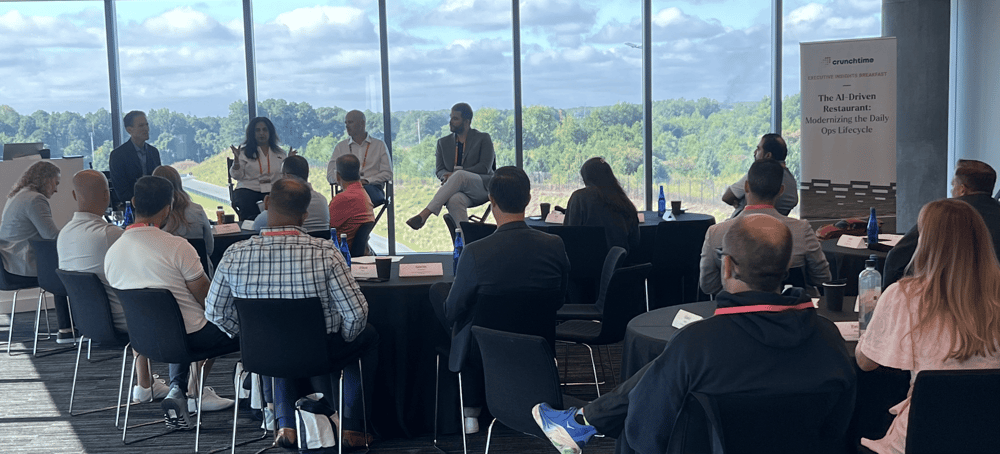
Led by Crunchtime CEO John Raguin and a panel of premier technology leaders from Smoothie King, Zaxbys, and GoTo Foods, the discussion focused on operational intelligence: using practical AI to eliminate back-office friction, protect margins, and shift store leaders away from screens so they can focus on guests and team members.
Below are four key operational insights shared by the panel on how AI is reshaping the daily ops lifecycle across major restaurant brands.
1. Fueling the Engine: Focus on Unit Economics and Franchisee Profitability
Deploying enterprise technology fails if it does not deliver clear value to individual store operators. Leadership must evaluate every new capability against its direct impact on store profitability and ease of use, or it could fail to be embraced by franchisees or store leaders.
"For us at Smoothie King, everything centers around franchisee profitability. At the end of the day, even if an AI tool seems great, it has to fit the unit economics of an individual store and genuinely move the needle for that owner," said Jyoti Lynch, CIO at Smoothie King.
Jyoti highlighted the importance of translating complex data into simple, actionable steps for operators with varying levels of tech integration. "The tech maturity of Smoothie King franchisees varies wildly — some manage 40 stores and live inside dashboards, while others run a single store using paper and spreadsheets. When we deliver solutions, we don't just throw data at them; we say, 'Here are the top three things you need to focus on today.'"
2. Adjusting the Steering: Solve Specific Business Gaps to Protect Margins
To drive measurable ROI, new technology initiatives should target core revenue channels and specific operational bottlenecks rather than attempting to retrofit everything at once.
"When evaluating AI, we always tie the technology back to a specific business gap," explained Nick Petrocci, VP of Restaurant Technology at Zaxbys. "Zaxbys is 98% drive-thru operations, and 70% of our revenue flows through those lanes. If I deploy AI for efficiency, my primary focus is the drive-thru — using AI speed-of-service cameras to monitor dwell times and optimize mobile order pickup."
Nick noted that automating heavy operational tasks directly elevates the guest experience. "For us at Zaxbys, voice AI tooling elevates the experience at the drive-thru window. When cashiers aren't juggling 30 tasks at once — like filling drinks while taking orders — they engage with guests, ensure order accuracy, and deliver exceptional hospitality."
This shift highlights a fundamental truth of modern restaurant technology: automated tools aren't built to replace frontline hospitality, but to remove back-office friction and cognitive overload, so store teams can perform at their best.
He added, "Zaxbys stores using voice ordering find that because window cashiers aren't rushed or overwhelmed, they deliver a warmer, more attentive experience. Guests leave positive feedback because the staff is friendly and their order is 100% accurate."
3. Shifting into High Gear: Supercharge Field Coaching and Operational Efficiency
Field operations teams often spend hours manually reviewing store metrics before setting foot inside a restaurant. AI changes this paradigm by synthesizing data instantly, allowing field leaders to deliver immediate coaching. When field teams swap manual prep work for instant data diagnostics, routine store visits shift from reactive audits to proactive coaching sessions.
"AI analyzes massive operational datasets instantly to surface clear priorities for our GoTo Foods field coaches," said Adam McLellan, VP of Business Performance at GoTo Foods. "Instead of spending five hours prepping before stepping into a restaurant, a coach sits in their car, reviews a quick AI diagnostic, and walks in ready to focus on what matters most."
Adam emphasized that the goal of automation is empowerment, not reduction. "Across GoTo Foods, roughly 50 field operators support 5,000 locations for just a few hours at a time, so every visit must count. AI synthesizes massive store datasets ahead of time so field leaders can walk into a location with clear priorities and deliver maximum impact during those short visits."
He also addressed common initial misconceptions about automation: "Ten months ago when we were testing multiple platforms, our data and analytics teams pushed back out of fear that AI exists to replace their jobs. What we actually find across GoTo Foods is that AI doesn't cut headcount — it handles the heavy data crunching so our team can spend less time behind a screen and more time doing what they love: supporting operators, coaching franchisees, and driving business results."
Beyond store visits, Adam noted immediate operational wins in administrative workflows. "Where GoTo Foods finds immediate success with AI is in driving cost savings and operational efficiency — automating compliance, streamlining legal review, and managing complex state-by-state regulatory nuances that are difficult for humans to track manually."
When operators equip store leaders with AI built for restaurants, the performance gains compound quickly. As Jyoti noted, "Moving to Crunchtime and leveraging their AI tools has boosted our forecasting to 98% accuracy, while simultaneously improving efficiency with suggested ordering and suggested scheduling."
By shifting routine data crunching to automated and AI-powered tools, field leaders win back hours every week, giving them the time needed to build stronger relationships with franchisees and lift performance across every location.
4. Navigating the Guardrails: Overcome Change Anxiety and Guide Safe Tool Adoption
Bringing AI into restaurant operations requires a thoughtful approach to change management and data security. Leaders must address team member fears while establishing clear guardrails around proprietary corporate data. Winning store-level buy-in starts with positioning technology as a supportive partner rather than a replacement for human staff.
"A real layer of fear exists among store team members when they hear the word AI," Nick shared. "At Zaxbys, we actively teach our teams that these tools exist to help them excel at what they already do well — whether that means giving crew members a longer break or making heavy shifts run smoother."
Nick stressed that adoption requires persistent support. "Rolling out AI at Zaxbys requires continuous team education. When a store is understaffed, that is actually the most critical time to rely on automation. Once teams give the technology a fair shot and see the value, adoption naturally follows."
Security remains equally critical. "At Zaxbys, we don’t issue company devices that can access free, consumer-grade AI tools, because uploading operational data into public models risks exposing trade secrets," Nick explained. "When partnering with technology vendors who leverage AI, we enforce rigorous data processing addendums so our proprietary store data stays isolated, secure, and never trains third-party models."
Jyoti echoed the need for proactive corporate guidance. "If we don't provide secure, sanctioned AI tools to Smoothie King franchisees, they’ll likely export operational data into public LLMs anyway. Writing corporate policies is easy, but enforcing them requires actively guiding which tools our operators use."
Crossing the Finish Line: Driving ROI with Practical AI
The consensus among executive leaders in Atlanta was clear: practical AI is not about replacing humans, but about removing back-office friction so teams can run better, more profitable restaurants.
Ready to eliminate back-office friction and protect your brand's bottom line with outcome-driven AI built for restaurants? Download the AI Buyer’s Guide or request a demo today.
.png)