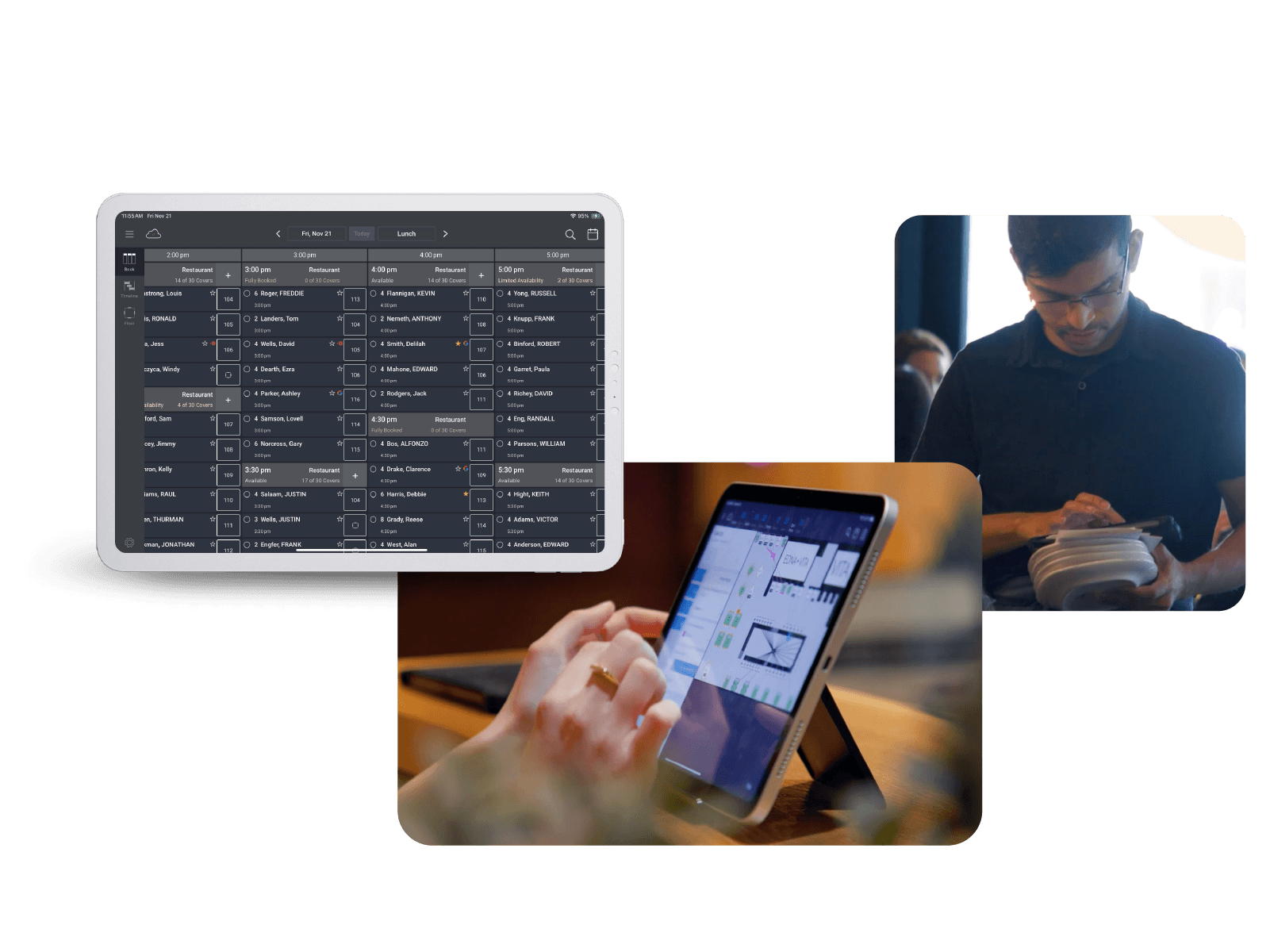
If your restaurant is still relying on marker boards and grease pencils at the host stand, the cracks are visible the moment guests walk in the door. Empty tables sit unused while parties crowd the entrance. Staff call out names over a room full of hungry guests. It's a chaotic first impression, and for multi-unit operators, that chaos has a real cost.
Table management is the technology that fixes this. At its core, it gives your front-of-house team a live, accurate view of every table in the restaurant: what's open, what's occupied, what needs to be turned, and how long each party has been seated. In 2026, the stakes for getting this right are higher than they've ever been.
The Case for Table Management Today
Labor costs have climbed steadily, and operators can't afford to lose time or staff on problems that are entirely preventable. A strong table management system reduces strain on your host stand, produces more accurate wait times, and helps servers stay organized without relying on instinct or memory. Some operators using Crunchtime Host have reported saving up to five hours of labor per day, a meaningful return in an environment where every labor dollar counts.
Beyond labor, there's the guest experience. Accurate wait times, timely SMS updates, and a host team that isn't scrambling create a meaningfully better first impression. For brands operating at scale, that consistency across locations is difficult to achieve without the right systems in place.
What to Look For in a Table Management System
The best systems today go beyond a basic floor plan. Look for tools that offer:
- A real-time, customizable floor plan accessible across devices
- Accurate, dynamic wait time estimates
- SMS messaging to guests
- Protection against double-seating
- POS integration across your existing tech stack
- Unified visibility for hosts, servers, and managers
Crunchtime Host supports over 80 POS systems, meaning it's built to work within the infrastructure most operators already have.
Part of a Bigger Platform
Table management is just the beginning. Because Crunchtime Host is now part of the Crunchtime suite, it sits alongside labor scheduling, inventory, and food cost management, giving multi-unit operators one unified system to manage complexity at scale. For enterprise and large mid-market brands that are tired of reconciling data across disconnected tools, that's a meaningful shift in how restaurant operations can be run.
Want to learn more? Click here.