Settling for a “good enough” solution today can have a big impact down the line.
Restaurant and convenience store operators have no shortage of digital solutions to choose from. And when budgets are right, the cheapest options can look “good enough.”
But as your restaurant business grows, that’s when operations start feeling the drag: inconsistent execution, unclear visibility, and preventable issues that slow down scale. Here are three signs your current task management solution may be holding your brand back.
1. It’s not a restaurant solution—it’s just a checklist tool.
Many general-purpose task apps–like Jolt or Xenia–are simply digital clipboards. They’re fine for any “deskless” workforce, but not capable of supporting the complex needs of restaurants. For smaller restaurant operations, this solution can work for a while, but over time? The cracks start to show. Differences in operating hours, store formats, and even restaurant concepts all add complexity that more generic tools can’t support.
Restaurant-built solutions capture those nuances. Some even support franchise-specific workflows, making it easier to enforce brand standards and drive real accountability across every location.
2. You’re data-rich, but insight-poor.
Collecting data is easy. Using it is the hard part. Generic tools often bury information in scattered reports, inboxes, or exports, making restaurant operators dig for basic answers about what happened in a store.
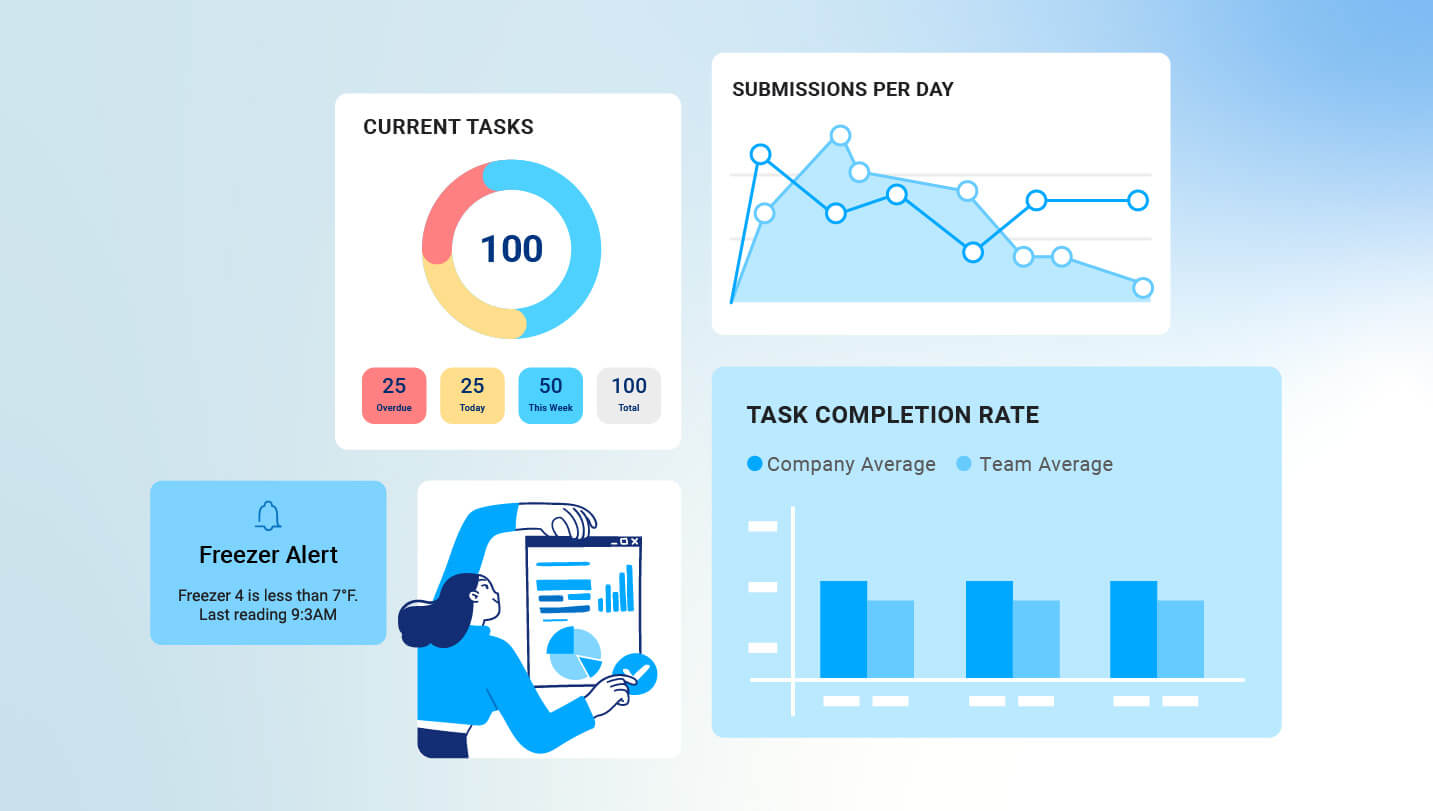
The right task management platform puts data front and center in its product. For example, Crunchtime Ops Execution, formerly called Zenput, offers ready-to-use reports that instantly surface what was completed (or wasn’t), and it connects with BI tools to reveal deeper patterns and risks. With visibility into near-due and at-risk tasks, managers can coach earlier and prevent small misses from turning into customer-experience problems or compliance failures.
3. Your food safety options are too rigid.
A core component of restaurant task management is food safety, yet many solutions lock you into proprietary hardware or nickel-and-dime you for necessary data access. This rigid approach means you pay "an arm and a leg" for a solution that limits your operational flexibility and makes it harder to move on if that hardware isn’t the right fit.
What restaurant operators need is a flexible food safety solution. That’s why Ops Execution lets you choose from multiple hardware brands for your temp monitoring needs and even offers options to spread costs out over time through a rental program. Because your critical compliance tools should work for you, not restrict you.
How do you know when it’s time to switch?
If your current system makes scaling harder, reporting slower, or food safety more restrictive than it needs to be, it’s worth exploring alternatives. Set up time with the Crunchtime team to talk through your needs and see whether Ops Execution could give you the visibility, flexibility, and control to level up your operations as you grow.