.png)


The Power of Foodservice BOH System Centralization
CrunchTime's restaurant management software combines inventory management and labor management for the most accurate data available. Learn more.
Read more
Technology isn’t the challenge in restaurant operations anymore. Complexity is.
That was the clear theme from Crunchtime’s innovation forum panel at this year’s Restaurant Leadership Conference.
The session included industry leaders from Biscuitville, Topgolf, and Smalls Sliders, and while their concepts vary widely in format and scale, they all face the same core issue: How to bridge the gap between technology investment and real execution at the store level.
Let’s dive into the key takeaways from the session.
For Biscuitville, growth exposed a fundamental issue. When the brand expanded from 45 locations, it wasn’t operating one system–it was operating dozens. Each region, and often each restaurant, had its own way of doing things.
The shift to unified systems wasn’t about innovation for its own sake. It was about survival at scale.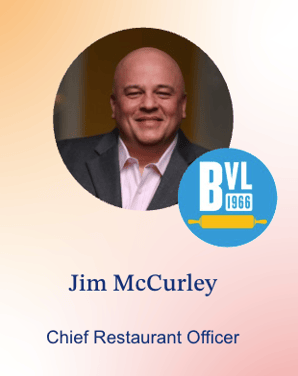 Jim McCurley, Chief Restaurant Officer at Biscuitville, explained, “Every brand starts small, but at some point, the old ways become unsustainable for growth. At Buiscuitville, we needed to move to more universal systems to create consistency in the field, and tools like Crunchtie Ops Execution have been a game-changer in helping us get there.”
By standardizing execution tools and centralizing visibility, the team moved from fragmented operations to a single source of truth. The result was more than just cleaner data–it enabled consistent execution across locations and gave leadership real-time insight into what was happening in the field. That visibility became the foundation for sustainable growth.
Small Sliders approached the challenge from the opposite direction. As a newer concept, they had the rare opportunity to build their tech stack from the ground up. But instead of chasing every new tool, the focus was on intentionality.
The priority was clear: create a unified system early to ensure consistency, visibility, and scalability. Without that foundation, rapid expansion would break operations just as quickly as it built them.
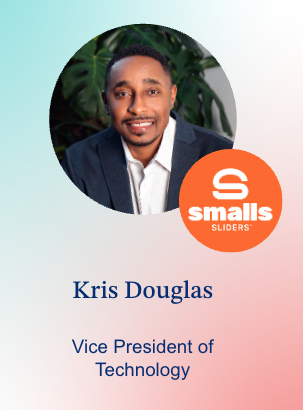 Kris Douglas, VP, Technology, at Smalls Sliders, remarked, “Every technology investment ultimately comes down to saving time or money, but there should also be some tangible ROI attached to it. At the same time, not everything is going to show monetary value, but if it's removing friction and making the day-to-day easier for operators, that’s value too.”
With the right systems in place, Small Sliders shortened feedback loops, improved decision-making, and streamlined new store openings. What would have required heavy manual effort became repeatable and efficient.
Across each of these brands, one theme stood out: technology only works if operators actually use it. And too often, they don’t. The panelists pointed to a common failure point in the industry. Technology decisions are made too far from the restaurant, without input from the people expected to use them.
The fix is straightforward, but often overlooked. The panelists agreed it’s best to get operators involved early to give them a chance to test things out and push on what doesn’t work, and build around how they actually operate, without assuming how they should.
At Topgolf, that philosophy goes even deeper. Technology teams are encouraged to spend time in venues, learning directly from operators. Understanding how a shift actually runs is the only way to build tools that fit naturally into it. Because when technology fights existing habits, it fails. When it aligns with them, adoption follows.
 Ted Hardy, Sr. Director of Hospitality Technology Transformation, at Topgolf USA, shared, “Technology only succeeds when it fits naturally into existing habits. If you fight the way operators work, adoption will fail. If you want technology to work, you have to start with the operator, understand how they think, what they value, and what problems they need to solve.”
One of the most practical insights from the discussion challenged a common assumption: Data isn’t there to replace operator instinct. It’s there to refine it.
Experienced operators rely on intuition built over years. The goal of technology is not to override that instinct, but to sharpen it with better information. Instead of guessing whether a restaurant was busier than usual, teams can see exactly how demand shifted. Instead of over-prepping inventory “just in case,” they can prep with precision.
These minor adjustments add up quickly. Reduced waste, tighter labor management, and improved consistency don’t come from one big change. They come from hundreds of better decisions made daily.
McCurley added, “Technology success doesn’t come from one big idea; instead, it’s created through a thousand small wins that compound into meaningful results.”
Another consistent theme was the need to eliminate low-value tasks. Restaurant operators don’t get into the business to sit in offices running reports. Yet many still spend hours on manual processes like forecasting, scheduling, and data entry.
Leading brands are using technology to take that work off their plates. At Topgolf, that means automating complex sales projections across multiple revenue streams. At Biscuitville, it means streamlining scheduling and inventory processes that once created hidden cost leaks. The goal isn’t just efficiency. It’s giving operators time back to focus on their teams and guests.
Douglas noted, “At Smalls Sliders, we want to use systems that make our operations more efficient and effective. If our managers aren’t jotting notes on a whiteboard or manually building schedules, they can focus on making adjustments based on performance.”
The panelists agreed that it’s critical to take a measured approach to adopting and implementing AI. Where AI can improve forecasting, surface insights, or enhance the guest experience, it has value. Where it doesn’t, it’s noise. In some cases, that means using AI behind the scenes to connect data and identify performance gaps. In others, it’s about delivering real-time, actionable insights to operators during a shift.
Hardy explained, “We focus on what actually makes a difference for operators. There’s a lot of innovation happening, especially in robotics, but much of it isn’t ready to drive real impact yet. So, we’re not going to force something into the business if we know it won’t work today.”
The takeaway is clear. AI is only as valuable as the problem it solves.
When it comes to measuring impact, each brand tracks what matters most to its model.
Different metrics, same principle. Technology should drive outcomes that matter to the business, not vanity metrics that look good on paper.
If there was one unifying idea across the discussion, it’s this: operational excellence comes from simplification. Unifying systems. Reducing friction. Delivering the right information at the right moment.
The brands that succeed aren’t the ones adopting the most technology. They’re the ones using it to make execution easier, faster, and more consistent. Because in restaurant operations, simplicity isn’t just a preference. It’s a competitive advantage.
Big thanks to James McCurley, Ted Hardy, and Kris Douglas for joining us and sharing your insights for this incredible panel session.
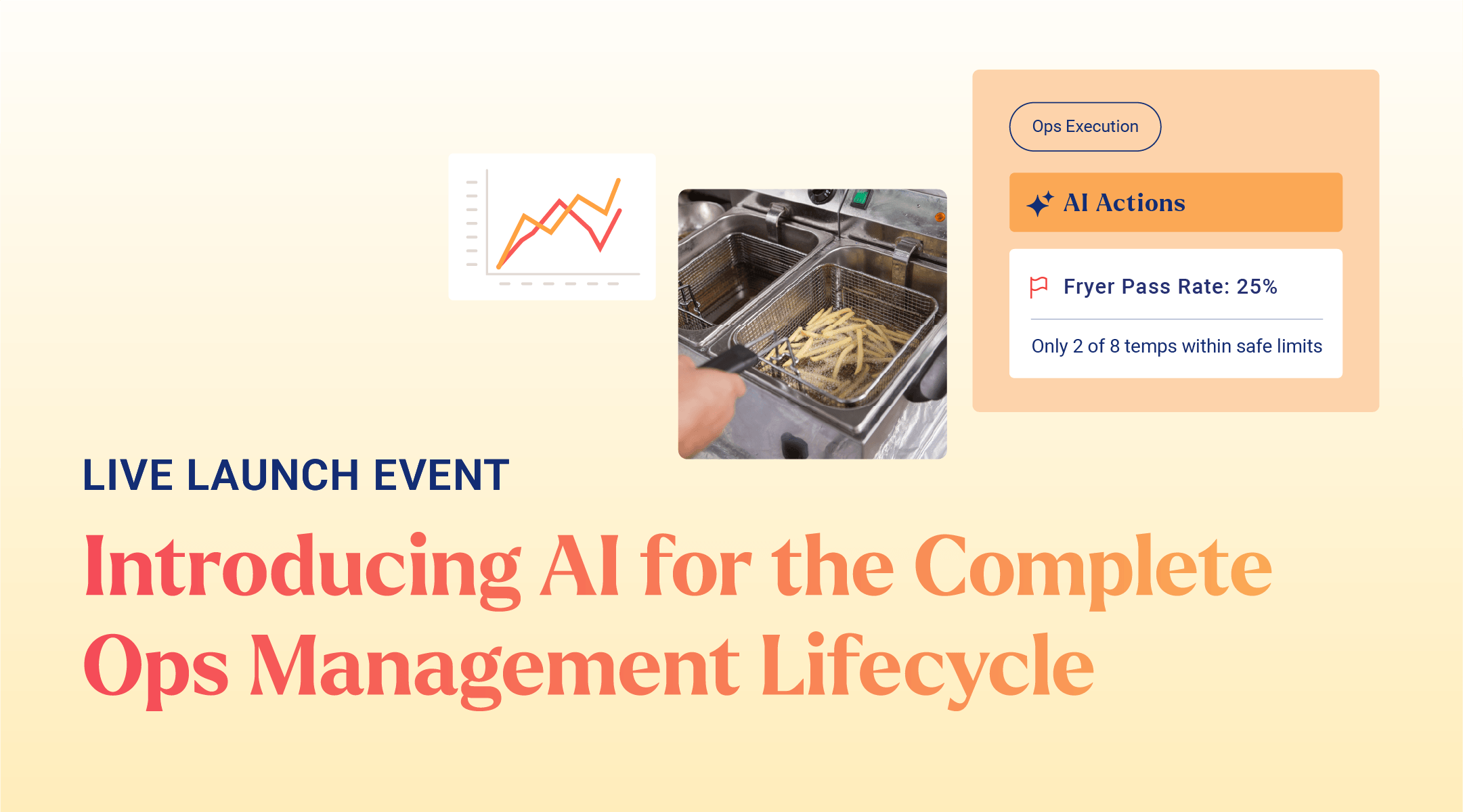
To learn more about how practical AI can drive impact across the complete operations management lifecycle, register for our upcoming Live Launch Event.