As the restaurant industry embraces 2026, operators are navigating a landscape defined by rapid change, tighter margins, and rising expectations from both guests and teams. To stay competitive and grow, leaders need a clear understanding of the benchmarks that define operations, the trends reshaping day-to-day execution, and the priorities that will matter most in the year ahead.
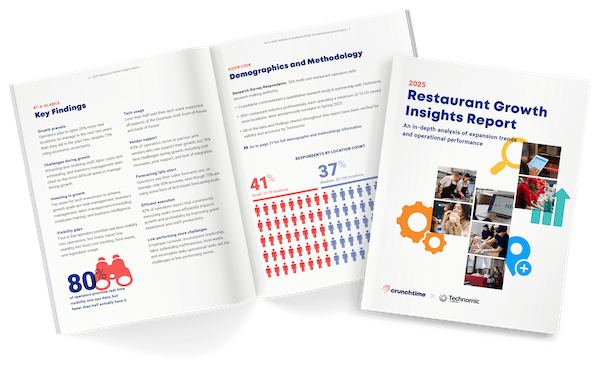
In the 2025 Restaurant Growth Insights Report, hundreds of multi-unit operators revealed where restaurants are scaling and stalling. The report provides clarity on key trends to help validate your own assumptions, while sharing the collective wisdom of the industry about what's really working (and what isn't). Use this list of key findings to benchmark your brand’s performance and identify precise areas for improvement to drive competitive advantage in 2026 and beyond.
Growth
1. 86% of operators agree their growth strategy is driven by a strong focus on operations.
2. Operators plan to open, on average, 20% more new locations in the next two years than during the last two, despite 73% being concerned about economic uncertainty, and 75% saying that growth is now harder to achieve.
3. Operators' top five areas for tech investment to achieve growth goals are task management, inventory management, labor management/scheduling, employee training, and business intelligence.
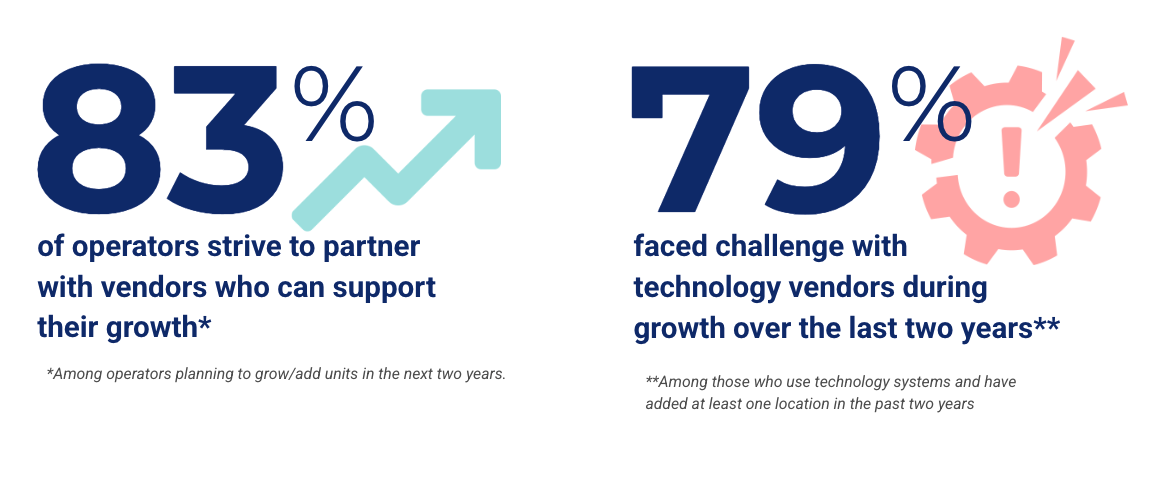
4. Although 83% of operators strive to partner with vendors who can support their growth, 79% faced challenges during periods of expansion, ranging from rising costs to poor integration, which all become amplified as brands scale.
5. Operators ranked attracting and retaining staff as the most challenging operational area to manage during growth.
 Forecasting
6. Operators ranked more accurate forecasting of food and labor costs as a top area where technology is helpful during economic uncertainty.
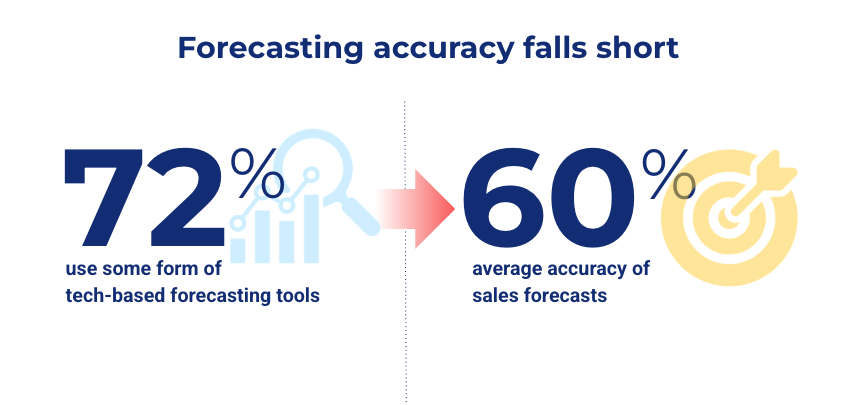
7. Operators report that their sales forecasts are only 60% accurate on average, despite 72% using some form of tech-based forecasting tools.
8. Only 28% of operators forecasting sales utilize software with AI.
Operations Execution
9. 42% of operators said better task execution would improve staff productivity and lead to higher sales and profit margins.
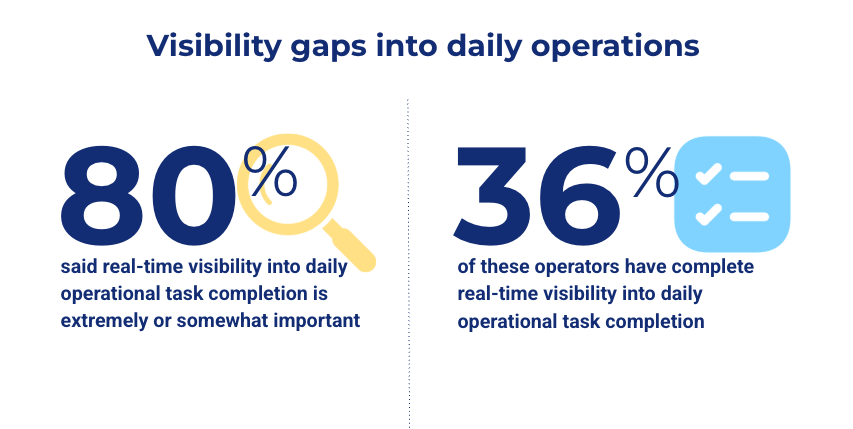
10. 83% of operators agreed it is extremely or somewhat important to have real-time visibility into food safety compliance.
11. 79% of operators said real-time visibility into equipment maintenance tracking is extremely or somewhat important, but only 35% of them actually have complete real-time visibility.
12. Operators ranked incomplete daily operational tasks as a top challenge in low-performing stores.
Labor & Staffing
13. 59% of operators agree that staffing and labor challenges impact their ability to expand operations, but only 35% are extremely confident in the effectiveness of their labor and scheduling strategy.
14. Only 28% of operators are extremely confident in their ability to forecast sales for scheduling employees.
15. Only 31% of operators are extremely confident in their scheduling system’s ability to balance staff efficiency within the labor budget.
16. Only 33% of operators are extremely confident in their ability to stay within labor budgets each week.
17. Only 38% of operators have complete real-time visibility into overtime and compliance monitoring.
18. 33% of operators rank unpredictable demand fluctuations as the top challenge for reducing labor costs.
19. Only 31% of operators are extremely confident in their managers’ ability to create efficient schedules without over- or understaffing.
20. Operators ranked labor scheduling inefficiencies as a top challenge in low-performing stores.
21. Operators ranked improved staff training and onboarding efficiency as a top area where technology is helpful during economic uncertainty.
Inventory Management
22. Operators ranked better inventory management and waste reduction as the top area where technology is most helpful during economic uncertainty.
23. Operators ranked better inventory management as the most significant impact of tech-driven systems on managing operations.
24. 84% of operators said real-time visibility into inventory levels is extremely or somewhat important.
25. 85% of operators said real-time visibility into food cost tracking and margin management is extremely or somewhat important.
26. While 80% of operators prioritize real-time visibility into data across key areas like labor, food costs, and compliance, fewer than half actually have it. Major blind spots exist in tracking food costs, waste, and ingredient usage—all critical to profitability.
Whether you’re refining your operations playbook or preparing for your next phase of growth, now is the time to turn these insights into action and set your brand up for its strongest year yet. Download the full research report here.


![[Video] Finalists Take the Stage: Highlights from the 2024 Ops Excellence Awards](https://www.crunchtime.com/hs-fs/hubfs/finalists-2.png?length=720&name=finalists-2.png)