Food safety isn't something you think about only during an inspection or after a recall. The strongest programs are designed to prevent issues before they happen — and to give you the documentation you need if they do.
The best food safety programs have 3 things in common: They're trackable, traceable, and automated. They use technology to track food safety processes across every location, reduce the risk of human error, and keep your customers (and brand) safe.
Here's where to start.
1. Digitize your food safety checklists and SOPs
Every strong food safety program starts with documentation. Digital checklists make it easy to standardize food safety procedures, ensure critical tasks are completed, and create an audit trail of every check.
The right operations execution platform goes beyond replacing paper. It should allow employees to record prep line temperatures directly within checklists, connect Bluetooth thermometers to automatically capture temperatures, and immediately alert staff when a reading falls outside of a safe range. That means less manual entry, fewer mistakes, and faster corrective action when something isn't right.
2. Automatically monitor fridge and freezer temps
Humans can’t check refrigeration equipment 24/7. But wireless sensors can.
Sensors continuously monitor refrigerators and freezers, helping identify equipment failures before they become food safety incidents. Instead of discovering a failed cooler hours later, managers can receive instant text or email alerts when temperatures move outside of acceptable thresholds.
That gives your team time to act before valuable inventory and customer safety is put at risk.
3. Stop handwriting food labels
Labelling is the easiest piece of the food safety puzzle to overlook
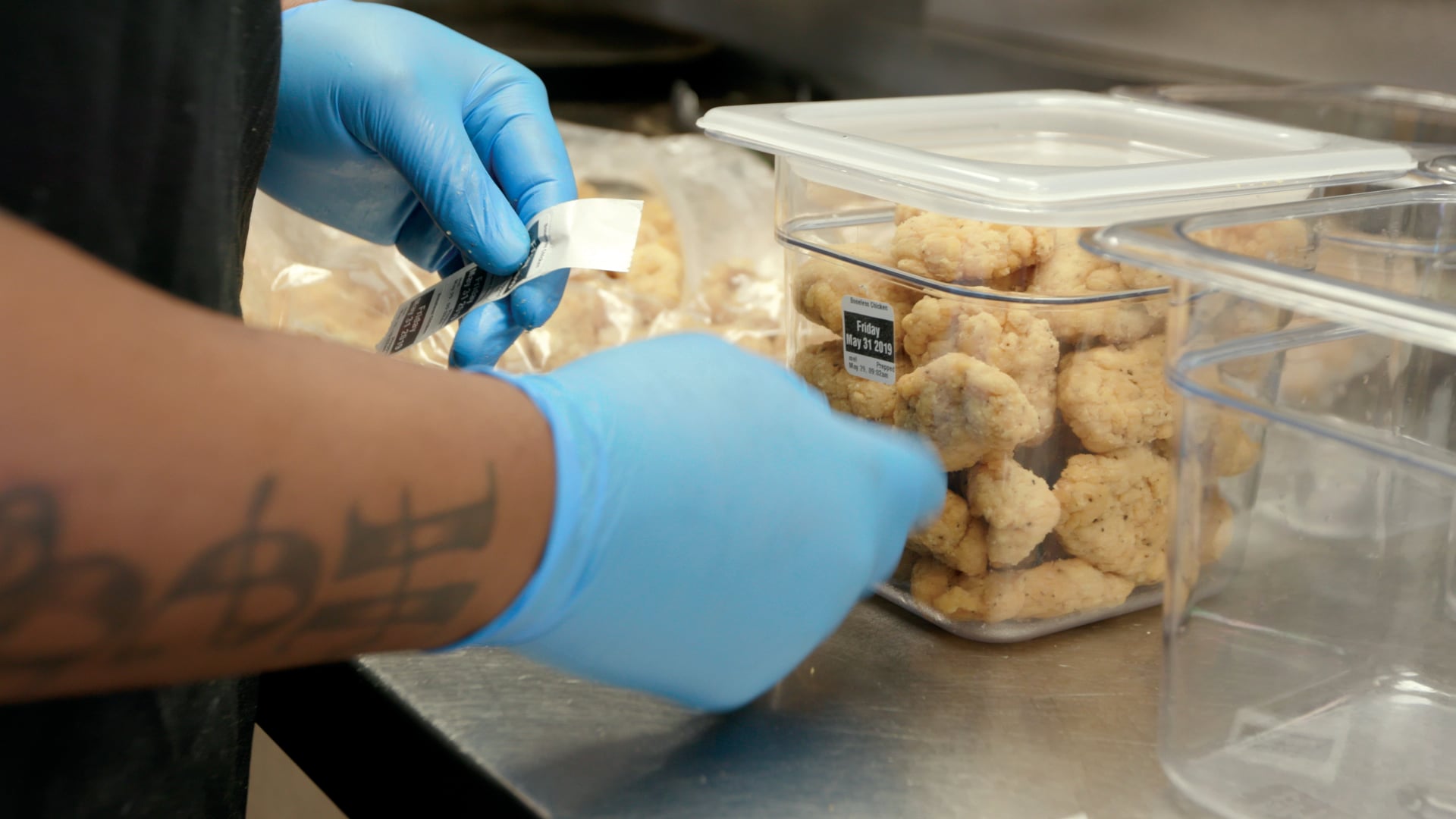
Handwritten labels can be difficult to read, contain incorrect dates, or be filled out inconsistently from one shift to the next. Printed food labels remove that uncertainty by automatically calculating expiration dates and producing clear, easy-to-read labels every time.
The result is better food rotation, less waste, and greater confidence that food is being served safely.
Bring your food safety program together
The most effective food safety programs don't rely on disconnected tools. They combine digital checklists, automated temperature monitoring, food labeling, and real-time reporting into a single system that's easy to manage across every location.
Solutions like Crunchtime Ops Execution help restaurant operators not only standardize food safety processes, but also verify that work was completed correctly – not just marked complete.
Ready to strengthen your food safety program? Click here to learn how Crunchtime Ops Execution can help your team simplify compliance, reduce risk, and protect your brand.