Automation and AI are reshaping how restaurant managers approach daily decisions, helping them act with greater confidence, speed, and strategic insight. Take forecasting, for example. For decades, forecasting has been one of the toughest tasks for restaurant managers to get right. Even experienced managers face a steep learning curve, and new managers often struggle to quickly understand the nuances of predicting demand.
Factors like unpredictable weather, local events, seasonal fluctuations, and changing customer preferences add layers of complexity that are difficult to account for manually. As a result, accurately anticipating sales, staffing needs, and inventory requirements has historically been a time-consuming and error-prone process, leaving restaurants vulnerable to overstaffing, stockouts, and lost revenue.
That’s where automation and AI can truly make a difference. Modern restaurant operations management systems can analyze historical sales, real-time trends, and external factors like the weather to provide managers with clear, actionable recommendations to improve their forecasts. Instead of relying on guesswork or memory, the system can actively determine how many staff are needed for each shift and when to adjust inventory orders.
That’s why systems, like Crunchtime, do more than just simply generate an AI forecast; they actively guide managers to improve it in real time. For example:
- When a forecast changes significantly: If the forecasted sales suddenly shift due to new data, the system highlights the change and recommends adjustments to staffing, inventory, or prep so managers can respond quickly.
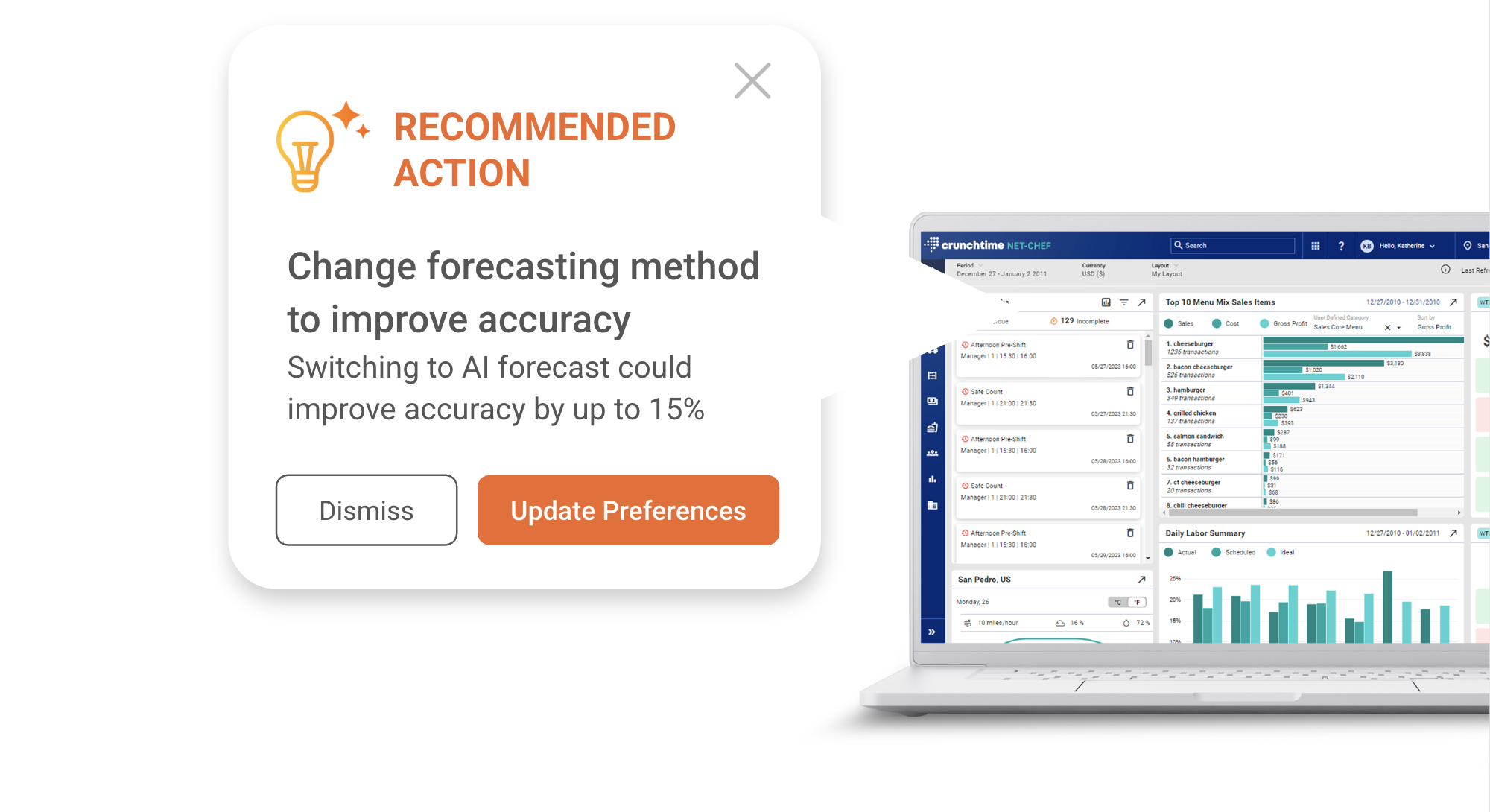
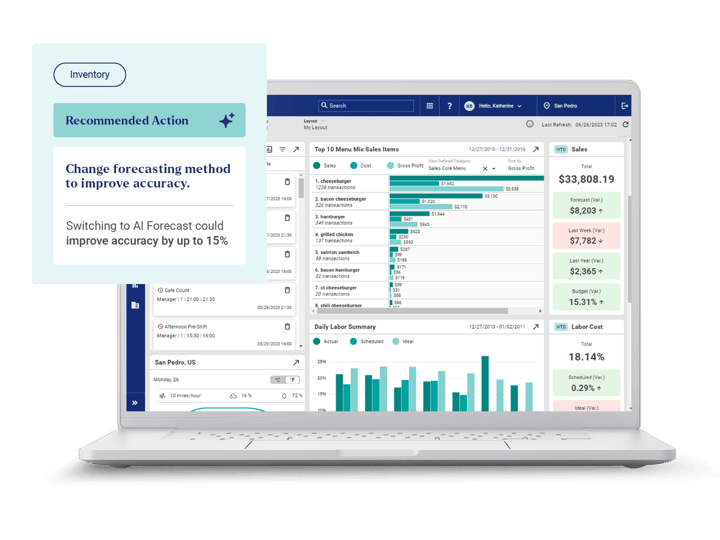
- When a different forecasting method proves more accurate: The system continuously evaluates which forecasting model best matches actual sales patterns and can suggest switching to a more accurate approach, helping managers fine-tune predictions over time.
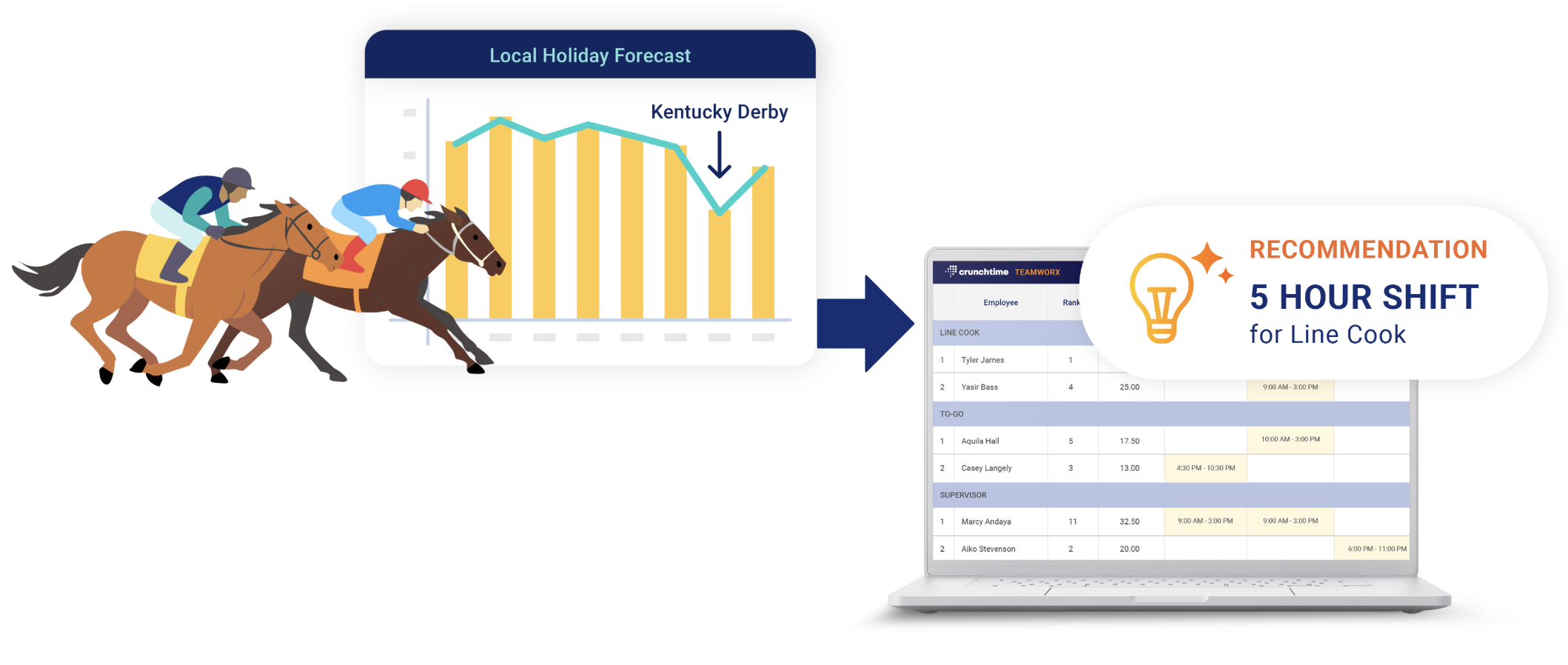
- When weather events are expected to impact demand: By integrating local weather forecasts, the system alerts managers to potential drops or spikes in traffic and provides actionable recommendations on staffing levels, inventory adjustments, and menu prep to minimize disruption.
In each of these cases, the recommendations turn complex data into clear, practical next steps, giving managers confidence to improve their forecast.
.gif?width=1600&height=1200&name=251215-SmartScheduling-GIF-Actions-v1%20(1).gif)
Examples of High-Impact AI Applications for Restaurants
AI is directly influencing how work gets done in restaurants today. The most impactful uses of AI deliver measurable operational impact with the least effort, rather than chasing every new technology trend.
Restaurants are increasingly turning to AI in these areas:
- Predictive Labor Scheduling: Automatically builds optimized schedules and makes scheduling recommendations based on historical sales, weather, local events, holidays, and more.
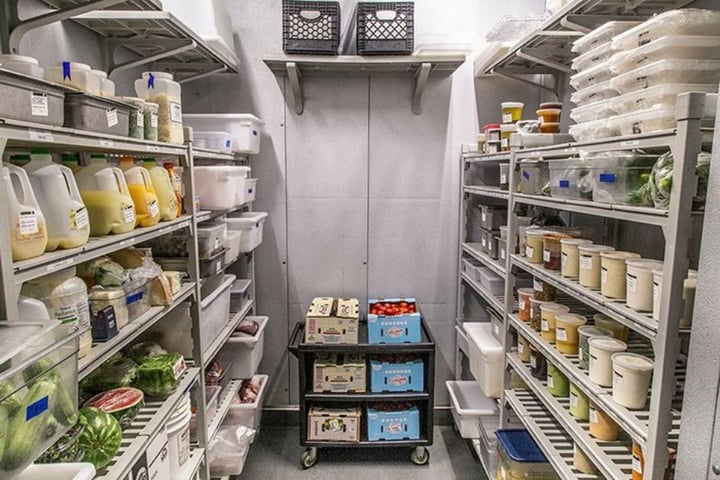
- Inventory Optimization: Order recommendations tell you exactly how much to order to reduce waste and meet demand.
- Dynamic Pricing & Menu Recommendations: Adjust menu items or promotions based on demand patterns.
- Customer Engagement: Personalized offers that increase repeat visits.
The bottom line on AI for restaurants
Ultimately, the goal of AI in restaurants isn’t to replace managers. It's to give them the tools to make smarter, faster, and more confident decisions every day. When implemented thoughtfully, AI turns complex operational data into actionable recommendations that are easy to understand and act on, whether it’s staffing the right number of employees, ordering the correct quantities of inventory, or adjusting menu offerings based on demand.
By focusing on high-impact applications that directly improve the bottom line, operators can reduce waste, optimize labor, and deliver a better guest experience, all while freeing managers to spend more time coaching their teams and planning for growth. The right AI doesn’t just predict what might happen; it empowers restaurant teams to respond proactively and consistently, ensuring every store can operate at its best.
To learn more about how AI forecasting tools can help your business, request a personalized demo here: https://www.crunchtime.com/request-demo